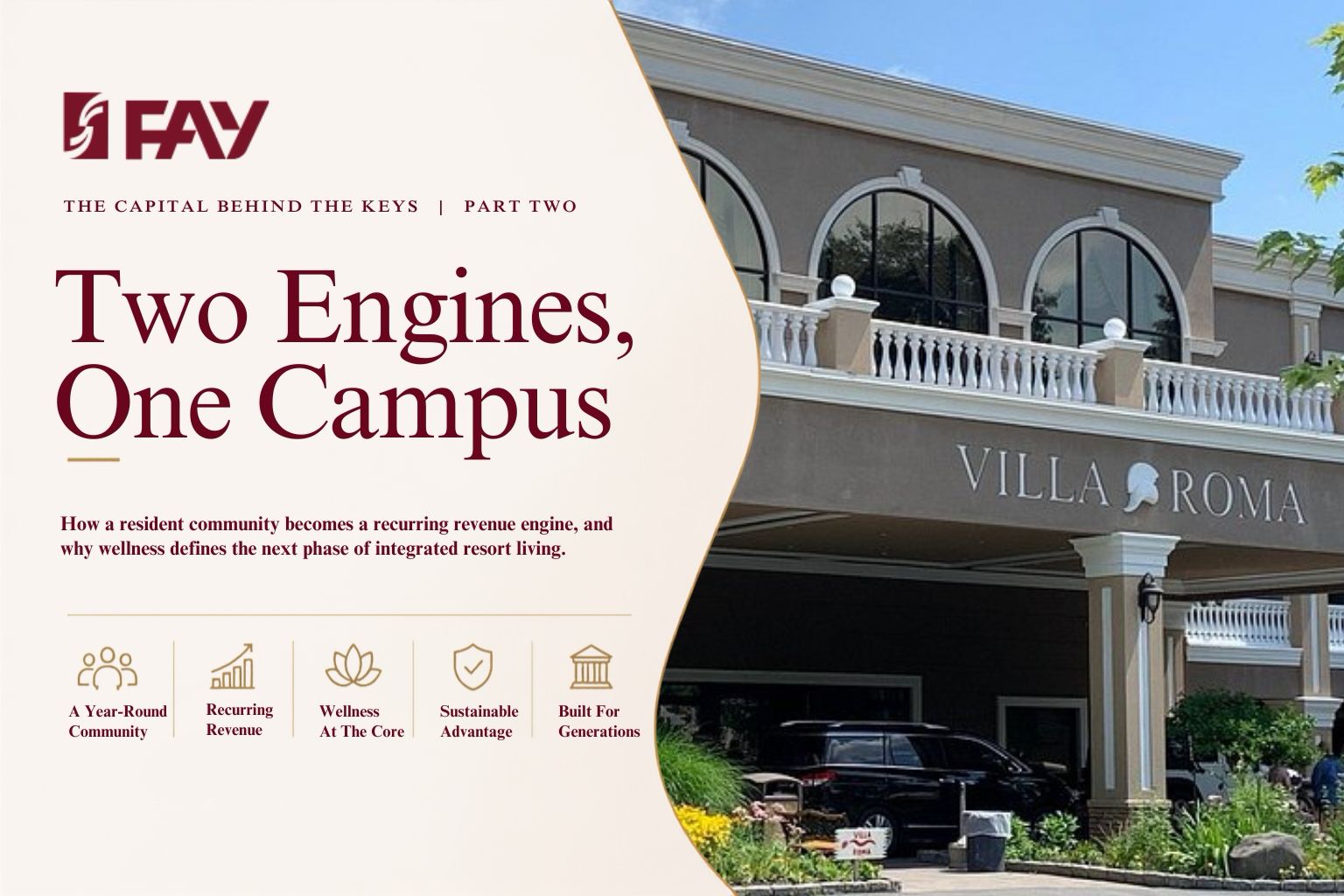
How a resident community becomes a recurring revenue engine, and why wellness defines the next phase of integrated resort living.
Part One established the first engine of the integrated resort model. The residences convert the brand into capital, and the sale proceeds fund development and supply the working capital that room revenue strains to produce. That engine runs hardest during the build and the sell-out. A second question follows once the residences are sold. The asset still earns, and the question is what it earns and for how long. The answer reveals a second engine, quieter than the first and more durable, that runs for the life of the property.
The Second Engine
A resort with a resident community owns something a transient hotel lacks, namely a year-round population that lives on the campus and spends on it. Guests arrive and depart. Residents stay. They dine in the restaurants, book the spa, play the course, and bring family and friends who do the same. Each resident becomes a recurring source of demand at a fraction of the acquisition cost of a booked guest.
The revenue significance is up to 40 percent of lifestyle-hotel revenue. It can come from sources beyond the room, across food, beverage, and wellness. A resident community deepens every one of those streams. The restaurants gain a local base that fills tables midweek and through the shoulder season. The spa gains members who return across the year. The amenity programming gains a population that engages with it as part of daily life. Revenue that a transient hotel earns only when rooms fill becomes a steadier flow anchored by people who live there.
Revenue stream | Driver | Character |
|---|---|---|
Dining and beverage | Resident and guest patronage | Year-round, weather-resistant |
Wellness and spa | Resident memberships and packages | Recurring, high-margin |
Recreation and golf | Resident access and guest passes | Seasonal with shoulder demand |
Amenity and property management | Service fees on residences | Contracted and predictable |
Rental program | Owner-managed short stays | Variable, upside in peak season |
FAY Investment Group analysis. Non-room revenue share from EHL Hospitality Business School.
The Synergy Advantage
The integrated model also lowers the cost of delivering all of it. A resort that already runs housekeeping, maintenance, security, and grounds for its hotel extends the same teams to the residences. Shared services across hotel and residences create economies of scale that a standalone residential building works hard to reach. The fixed cost of a chief engineer, a security team, and a landscaping operation spreads across a larger base, which lowers the common-area cost for residents and improves the operating margin for the property. One platform serves two products, and the efficiency belongs to both.
The Community Effect
A living community changes the character of a resort in ways that compound over time. Transient demand fluctuates with the season and the cycle. A resident population provides a base that holds through both. That base supports the working capital of the wider campus, sustains the staffing levels that quality service requires, and gives the food, recreation, and wellness operations the volume they need to run well year-round.
The community also markets itself. Residents who value the place tell others, host visitors, and draw new buyers and guests through genuine advocacy. The resort gains a demand engine that strengthens as the community grows, and the advocacy carries a credibility that paid marketing rarely earns.
The Wellness Axis
The next phase of this model is defined by wellness, and the data leaves little doubt about the direction. Wellness real estate expanded from 151 billion dollars in 2017 to 876 billion in 2025 and is projected to more than double to 1.8 trillion by 2030, which makes it the fastest-growing sector of the wellness economy, according to the Global Wellness Institute. The United States is the largest national market at 254 billion dollars, and North America is the second-largest region at 274 billion. For a community positioned in the United States, that concentration of demand sits close to home.
Wellness real estate market | Value |
|---|---|
Global, 2017 | $151 billion |
Global, 2025 | $876 billion |
Global, 2030 (forecast) | $1.8 trillion |
United States, largest national market | $254 billion |
North America, second-largest region | $274 billion |
Figures from the Global Wellness Institute, May 2026.
Buyer preference has moved in the same direction. Knight Frank reports that luxury residential is moving beyond location and prestige, with buyers focusing on wellness, community, and long-term value. The home is becoming part of how people manage their health and their time, and the resort community is well placed to deliver that, because it pairs residential ownership with programming, practitioners, and facilities that a standalone home works hard to assemble.
The Rural Retreat Opportunity
The opportunity is sharpest in rural and drive-to destinations within reach of major cities, where demand is strong and credible supply remains limited. Sullivan County, in the western Catskills of New York, illustrates the profile. It sits within a two-hour drive of New York City, which places it inside the largest and highest-income leisure market in the country. The landscape supports four seasons of use, with skiing and wellness in winter, golf and the outdoors in summer, and foliage and culture in autumn.
A buyer seeking a wellness-led retreat within a short drive of the city is the same buyer whose spending is growing fastest and whose loyalty follows the quality of the experience. A resort community in that setting pairs the calm of a rural retreat with the service depth of a managed campus, a combination that few markets offer and fewer deliver well.
A Community Built Around Wellbeing
The integrated resort community earns on two engines. The residences supply the capital. The community supplies the recurring income. Wellness now sets the direction for both, because it draws buyers, commands a premium, and deepens the daily engagement that recurring revenue depends on.
At The Villa Roma Resort in Sullivan County, FAY Investment Group is building toward exactly this combination. The concept under development pairs a gated community of timber chalets with the resort’s amenity base and a wellness platform that includes a structured retreat program and concierge access to health services on the campus. The ‘Health and Horizon’ experience, delivered today as a curated program, is being designed to expand into a full multi-day retreat that residents and guests can plan a stay around. The aim is a community where ownership, service, and wellbeing reinforce one another, and where the resort and the residences each make the other stronger.
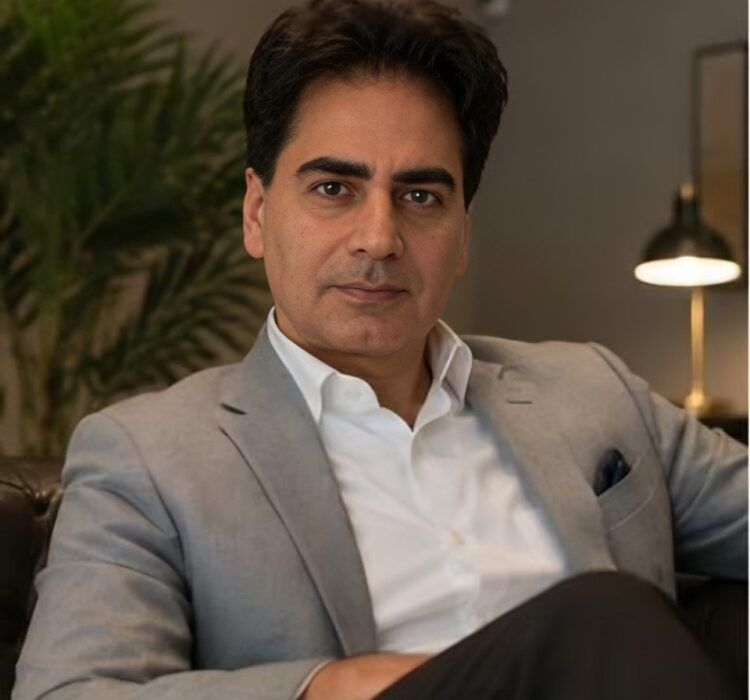
Sandeep Wadhwa is Chairman of FAY Investment Group, with over two decades of experience in hospitality and real estate investing. He has led multi-billion-dollar transactions and managed complex assets across global markets. His approach focuses on discipline, execution, and long-term value creation.